Eye Lag vs Standard Lag Screw: Key Differences Explained
Why Buyers Often Confuse These Two Fasteners
Eye lag screws and standard lag screws share a similar threaded body and are both commonly used in wood structures.
Because of this, buyers and installers often assume they are interchangeable.
In reality, their head design, application purpose, and installation logic are fundamentally different.
Understanding these differences helps prevent misapplication and improves overall project safety.
Basic Structural Difference
The most obvious difference lies in the head design:
Eye Lag Screw
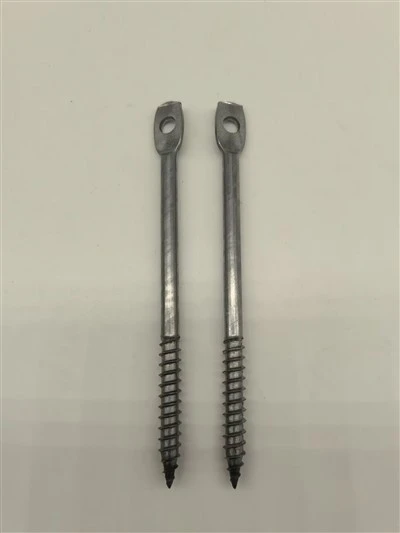
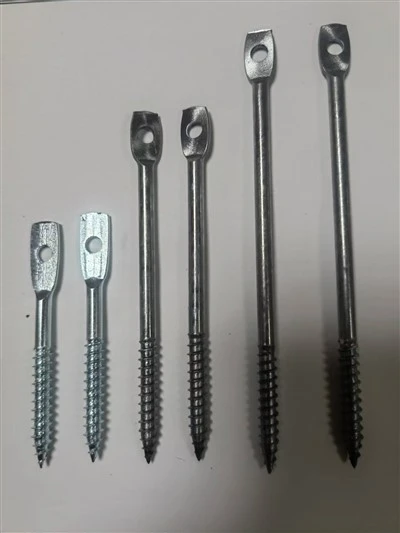
Features a closed or semi-closed eye loop designed for attaching wire, cable, chain, or hooks.
Standard Lag Screw
Uses a hex head or square head designed to clamp materials together using a washer.
This difference directly determines how each fastener is used.
Functional Purpose Comparison
Eye Lag Screw
Eye lag screws are designed to create a hanging or suspension point.
The eye serves as a built-in connector, eliminating the need for additional brackets or hardware.
Standard Lag Screw
Standard lag screws are designed to fasten or clamp materials together, such as securing beams, brackets, or plates to wood.
They are not intended to serve as attachment points for hanging loads.
Load Direction and Force Transfer
Load behavior differs significantly:
Eye Lag Screws
Typically carry vertical tensile loads (downward force) through the eye.
Standard Lag Screws
Commonly handle shear and clamping forces between joined materials.
Using a standard lag screw for hanging applications can result in improper load transfer.
Typical Applications
Eye Lag Screw Applications
Ceiling wire suspension systems
Hanging lighting fixtures
Supporting cables or chains
Acoustic ceiling installations
Standard Lag Screw Applications
Wood-to-wood connections
Mounting brackets or plates
Structural framing support
Heavy-duty clamping applications
Each fastener excels in its intended role.
Installation Differences
Eye lag screws are typically installed using:
Drill adapters
Rods or bars inserted through the eye
Specialized eye lag installation tools
Standard lag screws are installed using:
Wrenches or sockets
Impact drivers (with caution)
Installation method reflects the intended function of the fastener.
Material and Finish Considerations
Both eye lag screws and standard lag screws are available in:
Zinc-plated steel for indoor use
Stainless steel for outdoor or corrosive environments
However, eye lag screws used in ceiling systems often require better surface finish and eye geometry consistency to ensure reliable attachment.
Safety and Compliance Implications
Using the wrong fastener can lead to:
Improper load support
Increased risk of pull-out or failure
Non-compliance with project specifications
In commercial ceiling and suspension systems, eye lag screws are typically specified explicitly for hanging applications.
When an Eye Lag Screw Is the Better Choice
Choose an eye lag screw when:
A suspension or hanging point is required
Load is applied vertically
Attachment of wire, cable, or chain is needed
Installation is into wood or framing members
Using the correct fastener improves safety and installation efficiency.
When a Standard Lag Screw Makes More Sense
Choose a standard lag screw when:
Materials need to be clamped together
Shear strength is required
No hanging attachment point is needed
Structural framing connections are involved
Each fastener should be used within its design intent.
While eye lag screws and standard lag screws may look similar, they serve very different purposes.
Eye lag screws are designed for suspension and hanging applications, while standard lag screws are intended for fastening and clamping.
Understanding these differences helps buyers, installers, and engineers select the right solution and avoid costly installation mistakes